Certification Standards and Their Role in Building Trust for Virtual Dealer Environments

Virtual dealer environments combine live video streams with digital interfaces so players can participate in table games without visiting physical casinos, and certification standards serve as the backbone that verifies fairness, security, and operational integrity across these platforms. Regulatory bodies and independent testing agencies evaluate software, hardware, and procedural controls before platforms receive approval to operate, which creates measurable benchmarks that operators must meet on an ongoing basis.
Core Components of Certification for Virtual Dealer Systems
Certification processes examine random number generators that determine card shuffles and wheel outcomes, encryption protocols that protect player data during live transmissions, and surveillance mechanisms that monitor dealer actions in real time. Laboratories such as Gaming Laboratories International conduct multi-stage reviews that include source code analysis, penetration testing, and field trials under simulated load conditions, while additional checks confirm that payout percentages align with published rules and that withdrawal procedures function without undue delays.
These evaluations extend beyond initial approval because standards require periodic re-audits, often on quarterly or annual cycles, to account for software updates and changes in network infrastructure. Observers note that consistent re-testing reduces opportunities for undetected manipulation and maintains alignment with evolving technical requirements.
Regional Regulatory Approaches and Their Impact
Jurisdictions handle oversight differently yet converge on the principle that third-party verification builds consumer confidence. In several U.S. states that permit online table games, licensing commissions mandate certification from approved labs before any virtual dealer product can launch, and operators must submit compliance reports that detail how they address identified vulnerabilities. Canadian provincial regulators similarly require documented adherence to technical standards, including secure streaming protocols and identity verification procedures that prevent underage participation.
European markets have established cross-border recognition frameworks where certification issued in one member state receives consideration in others, provided core criteria such as data localization and anti-money laundering controls remain intact. Data from industry reports indicate that platforms displaying multiple regional seals experience higher player retention rates compared with uncertified competitors, although exact figures vary by market and promotional activity.
Security Protocols and Transparency Measures
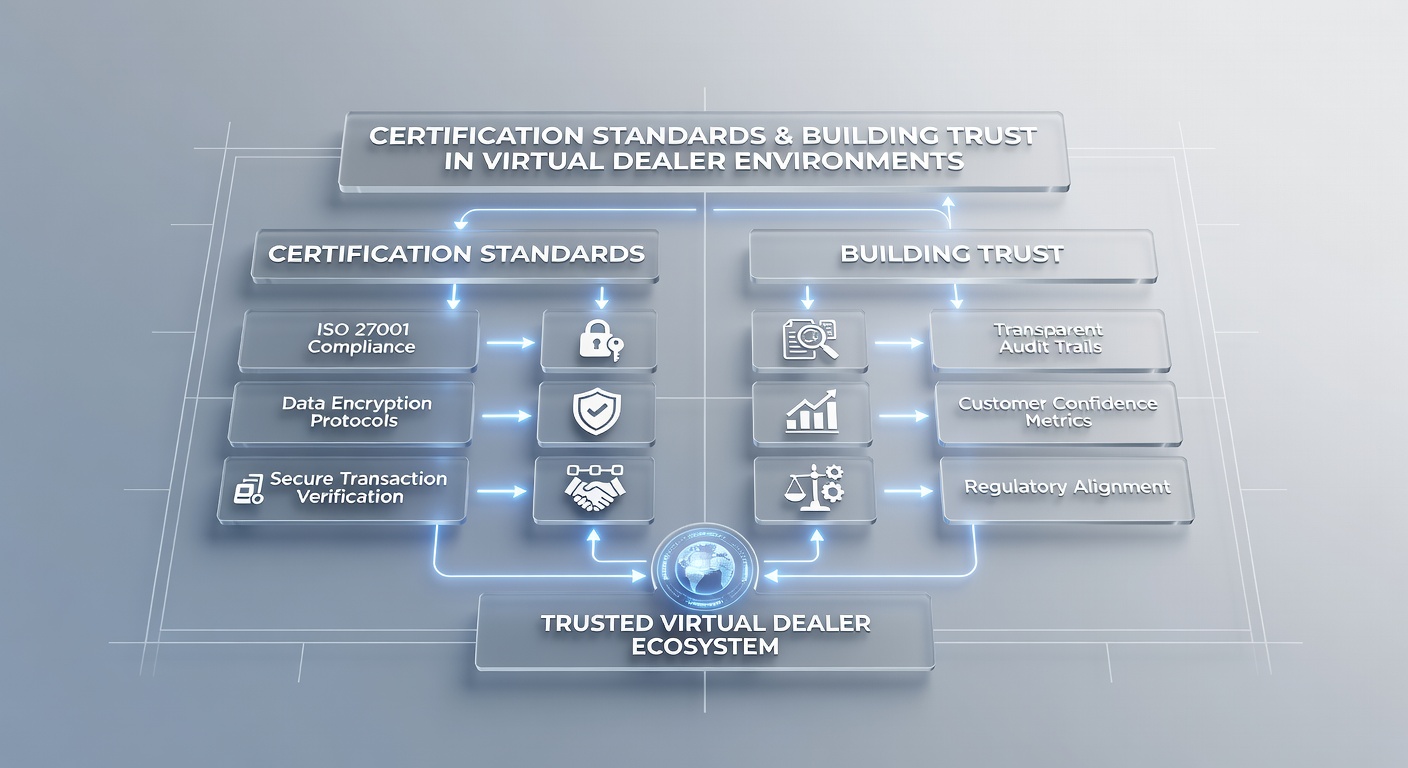
Virtual dealer environments transmit continuous video and audio feeds, so certification includes verification of latency controls, stream integrity checks, and backup systems that activate during connectivity failures. Standards also address dealer training records and shift-rotation policies that limit opportunities for collusion. When platforms publish audit summaries on their sites, players gain access to information about tested return-to-player percentages and any corrective actions taken after previous reviews.
What's interesting is how these disclosures function alongside player complaint resolution processes, because certified operators must maintain documented channels for disputes and report aggregate resolution statistics to regulators. Research indicates that transparent reporting correlates with lower dispute volumes over time, as players receive clearer expectations about game rules and payout timelines.
Developments Emerging in May 2026
Industry participants anticipate updated technical guidelines scheduled for release in May 2026 that address artificial intelligence applications in dealer monitoring and enhanced biometric authentication for high-limit tables. Regulators in multiple regions plan to incorporate these guidelines into existing certification frameworks, which means operators will need to demonstrate compliance with new performance benchmarks for automated oversight tools. Early consultations suggest the revisions will emphasize interoperability between different streaming technologies while preserving core requirements for independent verification.
Trade associations such as the American Gaming Association have published summaries of proposed changes, and stakeholders continue to submit feedback ahead of formal adoption. Those who've tracked previous standard updates observe that implementation timelines typically span six to twelve months after initial publication, giving platforms time to adjust systems without interrupting service.
Challenges in Maintaining Certification Compliance
Operators face ongoing costs related to testing fees, staff training, and infrastructure upgrades whenever standards evolve. Smaller platforms sometimes struggle to allocate resources for comprehensive audits, which can delay market entry or force reliance on white-label providers that already hold valid certifications. Larger operators spread these expenses across multiple jurisdictions and often maintain dedicated compliance teams that coordinate with several laboratories simultaneously.
Yet the investment yields tangible benefits because certified status frequently serves as a prerequisite for payment processor partnerships and advertising placements on major platforms. Figures from recent industry analyses show that platforms without recognized certifications encounter higher customer acquisition costs and slower growth trajectories in competitive markets.
Conclusion
Certification standards establish verifiable criteria that virtual dealer environments must satisfy to operate legally and gain player confidence across diverse regulatory landscapes. Through repeated testing, transparent reporting, and adaptation to emerging technologies, these frameworks support consistent security and fairness outcomes while accommodating regional differences in oversight approaches. As new guidelines take effect in 2026, operators and regulators alike will continue refining processes that underpin trust in live online table gaming.